






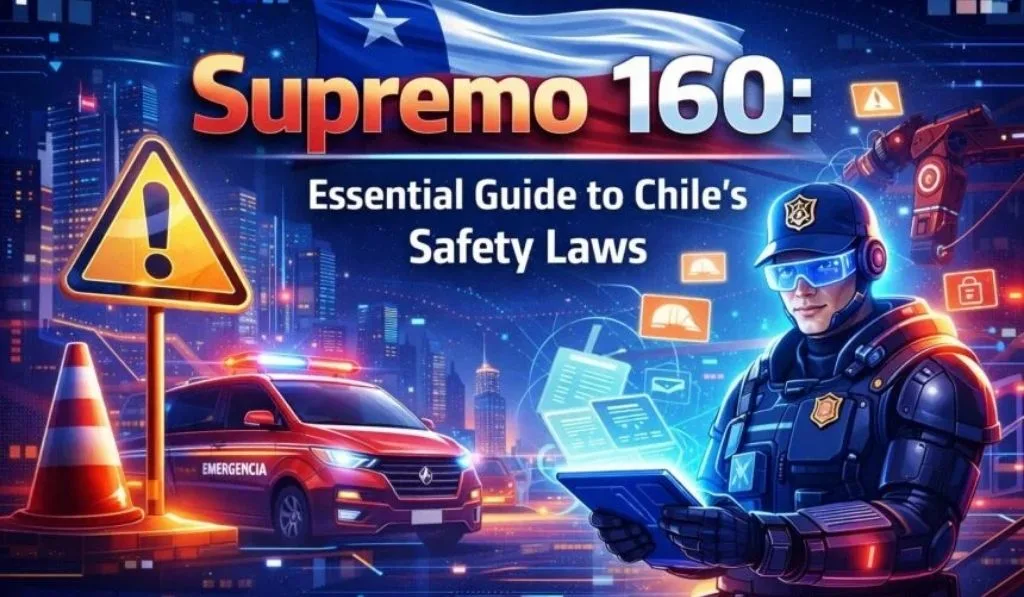
Understanding Chilean regulations can feel overwhelming for businesses and consumers alike. Decreto Supremo 160 is one of the country’s most significant regulatory frameworks. It touches two entirely different industries, each with serious public health consequences.
This guide explains what Decreto Supremo 160 is, how it works, and why it matters. Readers will find clear, factual information on both versions of this decree. By the end, the purpose and scope of DS 160 will be fully clear.
What Is Decreto Supremo 160?
Decreto Supremo 160 refers to two separate Chilean supreme decrees issued under presidential authority. Both carry the same number but operate in entirely different sectors. The first version was issued in 2009 by the Ministry of Economy. It governs safety standards for liquid fuel systems and industrial infrastructure. The second version was issued in 2012 by the Ministry of Health under Law 20.606. That version established Chile’s front-of-package food warning label system. Both decrees are legally enforceable and carry real compliance obligations.
The Origins and Background of Decreto Supremo 160
Chile has a long history of issuing sector-specific supreme decrees to manage public risk. The industrial version of DS 160 emerged from growing concerns about fuel handling accidents. Unsafe fuel storage had caused preventable fires, spills, and toxic exposure across the country. The food labelling version followed a different trajectory. By the early 2010s, Chile faced a rapid rise in obesity, diabetes, and diet-related illness. Ultra-processed food consumption was accelerating, particularly among children. The government responded with a structured, preventive regulatory approach rather than awareness campaigns.
The Industrial Version: Fuel Safety Under DS 160
The 2009 version of Decreto Supremo 160 sets strict standards for combustible fuel operations. It applies to fuel storage facilities, transport fleets, and distribution networks. Operators must meet specific tank construction requirements using approved materials. Maintenance schedules are mandatory and must be documented.
Leak prevention and continuous monitoring systems are required at all covered sites. Emergency response plans must be active and updated regularly. Transport vehicles must meet technical safety criteria before operating. Workers are required to complete safety training programmes and follow strict handling protocols.
The Food Labelling Version: Nutrition Standards Under DS 160
The 2012 version of Decreto Supremo 160 targets packaged and ultra-processed foods sold in Chile. It requires manufacturers to test nutrient levels against government thresholds. Products that exceed those thresholds must display a black octagonal warning label on the front-of-pack. Four warning labels are used: Alto en Azucares (High in Sugar), Alto en Sodio (High in Sodium), Alto en Calorias (High in Calories), and Alto en Grasas Saturadas (High in Saturated Fats). Products carrying any warning label cannot be marketed to children. They cannot feature cartoon characters or be sold in schools. Compliance is phased, with nutrient thresholds tightening over time.
Core Objectives of Decreto Supremo 160
Both versions of Decreto Supremo 160 share one central philosophy: prevent harm before it occurs. The industrial version applies engineering logic to eliminate fuel-related accidents at the design stage. The food labelling version forces manufacturers to disclose nutritional risks clearly.
This shifts accountability upstream, to producers rather than consumers. Additional objectives include reducing unnecessary bureaucracy in compliance processes. The decree also supports sustainable practices and responsible resource management. Both versions aim to align economic activity with broader public interest goals.
Key Components and Requirements
The key provisions of Decreto Supremo 160 differ by sector but follow a shared accountability framework.
Industrial provisions include:
- Redundant containment systems and approved safety margins
- Strict protocols for fuel handling, storage, and transport
- Environmental safeguards against leaks, spills, and contamination
- Worker protection standards in high-risk environments
Food labelling provisions include:
- Black octagonal front-of-pack warning labels when nutrient limits are exceeded
- Advertising restrictions banning child-directed marketing of labelled products
- Reformulation documentation requirements for manufacturers changing formulas
- Phased implementation schedules as thresholds become stricter over time
Who Must Comply with Decreto Supremo 160?
The decree applies to a wide range of organisations across both sectors. In the industrial sector, compliance is required from fuel companies, transport firms, storage facility operators, contractors, and logistics providers. In the food sector, the decree covers domestic food manufacturers, importers, distributors, and retailers selling products in Chilean markets. Small businesses and entrepreneurs in the food supply chain are also included. Both sectors share one rule: compliance applies regardless of company size. Non-compliance exposes operators to legal and financial penalties without exception.
How Decreto Supremo 160 Works in Practice
For industrial operators, the decree creates a structured cycle of certification and review. Sites must pass inspection before operations begin. Regular audits confirm continued compliance throughout the facility’s lifecycle. Workers complete mandatory training at defined intervals.
Transport routes must be pre-planned and documented. For food manufacturers, the practical process begins with laboratory nutrient testing. Results are compared against government thresholds. Packaging must be updated before products reach distribution. Advertising materials must be reviewed and restricted where warning labels apply. Reformulation records must be maintained if product formulas change.
DS 160 Compared to Other Regulatory Approaches
Decreto Supremo 160 takes a more targeted approach than broad general legislation.
| Feature | Decreto Supremo 160 | General Labour / Tax Laws |
| Scope | Sector-specific | Economy-wide |
| Focus | Prevention-first | Reactive or redistributive |
| Flexibility | Moderate | Generally higher |
| Applicability | Phased but direct | Often delayed |
| Bureaucracy | Reduced compliance steps | Often more complex |
| Adaptability | Principle-based, scalable | Tends toward rigidity |
Older statutes often create excessive compliance burdens without delivering targeted outcomes. DS 160 reflects a more modern regulatory design. It prioritises structural protection with fewer procedural hurdles. The approach is narrower but more directly enforceable than legislation covering many sectors at once.
Public Health Impact of Decreto Supremo 160
Both versions of the decree deliver measurable public health outcomes when enforced consistently. The industrial version reduces fire risks, toxic exposure, and environmental contamination near fuel infrastructure. Workers and nearby communities benefit from lower rates of preventable accidents. The food labelling version addresses Chile’s long-standing burden of diet-related illness.
Interpretive warning labels outperform numeric nutrition panels in changing consumer purchase behaviour. Many users report making healthier choices at the point of sale after warning labels were introduced. The large, clear label design reduces the information gap across literacy levels and income groups. This supports better health outcomes across all demographics.
Enforcement and Accountability
Decreto Supremo 160 does not rely on voluntary action. It establishes a clear legal chain of responsibility across entire operational chains. In the industrial sector, facility owners, operators, contractors, and maintenance entities are all accountable. In the food sector, manufacturers, distributors, and importers share responsibility.
Non-compliance is treated as preventable negligence, not accidental oversight. Government agencies issue and monitor compliance guidelines. Regular audits identify gaps. Public awareness campaigns target both employers and employees. Weak enforcement leads to unreported risk accumulation and preventable harm. The decree was designed precisely to prevent these outcomes.
Challenges and Limitations
No major regulation avoids criticism entirely. Decreto Supremo 160 has faced substantive objections from multiple directions. Many businesses find the decree complex, creating confusion during initial implementation. The compliance burden falls disproportionately on smaller operators with fewer resources. Industry groups in both the fuel and food sectors raised concerns about cost and competitive disadvantage at introduction.
Some critics argue that mandatory food labelling reduces individual consumer autonomy. Supporters counter that transparency expands real choice rather than restricting it. Additionally, single-nutrient warning labels do not capture the full nutritional profile of a product. A food can carry a warning label while still offering meaningful dietary value. Legal disputes over enforcement interpretation continue to surface in both sectors.
Global Influence of Chile’s DS 160 Model
Chile’s food labelling model under Decreto Supremo 160 has become a reference point for food policy globally. Countries across Latin America have adopted or adapted the front-of-package warning system. International health organisations cite non-communicable diseases as the primary driver behind the push for stronger labelling legislation worldwide.
The Chile model demonstrated that mandatory labelling is commercially viable. Food businesses initially resisted. Markets adapted. Reformulation followed. Studies suggest that the shift toward healthier product development also supports more sustainable manufacturing practices over time. The industrial safety version similarly offers a replicable blueprint for regulating high-hazard infrastructure. Nations managing chemical exposure risks and infrastructure safety challenges have studied DS 160 closely.
Read more: Wynonna Judd Performance Reactions: The Complete Guide to Her Live Impact
Tips for Businesses Approaching DS 160 Compliance
Organisations subject to Decreto Supremo 160 should treat compliance as an ongoing process rather than a one-time event. Industrial operators should schedule regular internal audits in advance of external inspections. Worker training programmes should be documented clearly and updated at each required interval. Food manufacturers should test products proactively against phased nutrient thresholds before distribution deadlines.
Advertising materials should be reviewed by a compliance specialist familiar with child-directed marketing restrictions. Keeping reformulation records is essential if product formulas are adjusted. Moreover, smaller businesses should seek guidance from trade associations familiar with DS 160 requirements. Early compliance reduces the risk of unexpected penalties significantly.
The Future of Decreto Supremo 160
Regulatory environments continue to evolve, and Decreto Supremo 160 is no exception. Nutrient thresholds in the food labelling version are designed to tighten in phases, applying increasing pressure toward reformulation. Fuel infrastructure is growing more complex, requiring updated technical standards over time. International policy alignment is also a factor: as neighbouring countries adopt similar regulatory models, cross-border consistency will become more important. Furthermore, growing awareness of non-communicable diseases is likely to drive additional restrictions on ultra-processed food marketing globally. The principles embedded in DS 160, including preventive design, structural accountability, and transparent disclosure, are well-positioned to remain relevant as both sectors develop.
Conclusion
Decreto Supremo 160 represents a prevention-first approach to public safety regulation in Chile. Whether applied to combustible fuel systems or ultra-processed food products, it places accountability at the source rather than managing damage after it occurs. For businesses, consistent compliance protects against legal risk and reputational harm.
For consumers, the decree delivers cleaner industrial environments and clearer nutritional information at the point of purchase. The model has already influenced food policy internationally and continues to offer a scalable framework for responsible regulation. DS 160 remains one of Chile’s most consequential and carefully structured public health instruments.
Frequently Asked Questions
What is Decreto Supremo 160?
Decreto Supremo 160 refers to two Chilean supreme decrees: one governing industrial fuel safety standards (2009, Ministry of Economy) and one governing front-of-package food warning labels (2012, Ministry of Health).
How does Decreto Supremo 160 work?
The industrial version requires certified facility design, maintenance, and worker training. The food version requires manufacturers to test nutrient levels and apply black octagonal warning labels when thresholds are exceeded.
Is Decreto Supremo 160 still in force?
Yes. Both versions of the decree remain legally enforceable. Nutrient thresholds in the food labelling version continue to tighten in phases, and industrial standards are updated as infrastructure evolves.
Who does Decreto Supremo 160 apply to?
It applies to fuel operators, storage facilities, transport providers, food manufacturers, distributors, importers, and retailers operating within Chile’s industrial and consumer food sectors.
Where can I find more information about Decreto Supremo 160?
Visit Aman Magazine at amanmagazine.co.uk for more informational guides on regulatory, business, and lifestyle topics.