








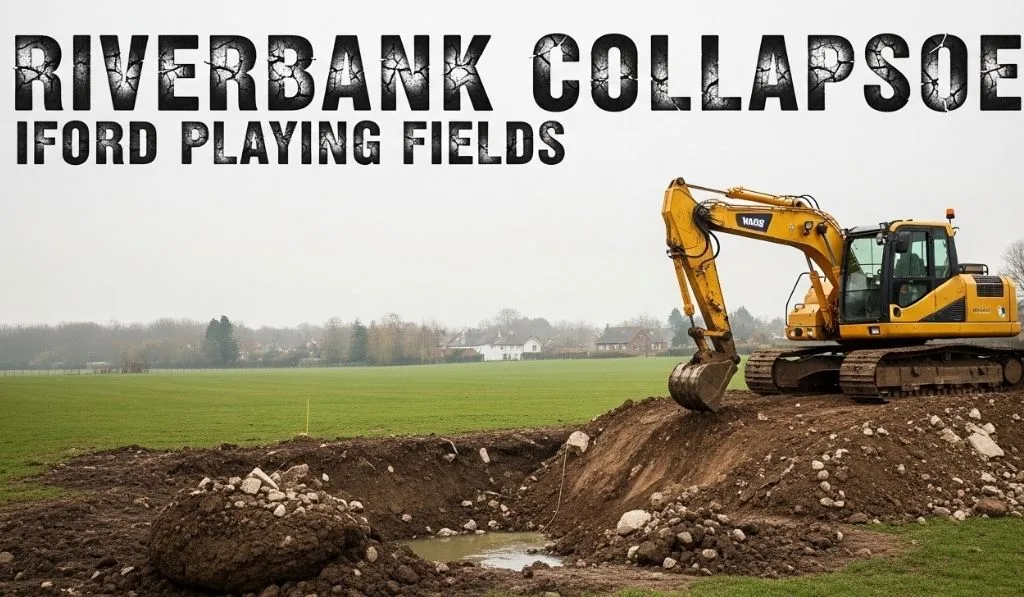
A peaceful riverside park changed dramatically overnight. Families, dog walkers, and cyclists who visit Iford Playing Fields regularly were left shocked by what they found. The riverbank collapse at Iford Playing Fields became one of the most talked-about environmental incidents in the Bournemouth and Christchurch area. This guide covers what happened, why it happened, and what it means for the community. Readers will find a full breakdown of causes, environmental impact, safety measures, and long-term solutions.
What Is the Riverbank Collapse at Iford Playing Fields?
The riverbank collapse Iford Playing Fields refers to a sudden and severe failure of land along the River Stour. A riverbank collapse occurs when soil, vegetation, and land at the edge of a river lose structural stability and suddenly give way into the water. Unlike gradual erosion, which happens slowly over months or years, a collapse is often sudden and dramatic. At Iford Playing Fields, the failure was noticeable almost overnight, surprising many regular visitors who had not seen obvious warning signs beforehand. This type of event is formally classified as riverbank failure or embankment collapse in environmental science.
Where Is Iford Playing Fields?
Iford Playing Fields lies beside the River Stour near Christchurch, Dorset, a scenic recreational space enjoyed for walking, cycling, and outdoor leisure. The fields serve as a major recreational hub for the local community, used for football, rugby, walking, dog exercise, cycling, and informal gatherings, especially during spring and summer. The river itself adds significant value to the area, offering scenic views and opportunities for swimming, paddleboarding, and wildlife observation. The site is located in the suburb of Iford, within the Bournemouth, Christchurch and Poole (BCP) Council authority area.
When Did the Collapse Happen?
On May 29, 2023, local resident Nicky Adams documented what appeared to be a sudden and severe embankment failure, although the collapse likely occurred around May 27, following a period of strong winds and unsettled weather conditions. Trees that once stood on solid ground had toppled over, their roots exposed and trunks partly submerged. There were no prior visible signs of instability, making the event all the more shocking. The incident quickly spread through local social media as residents shared images and videos of the dramatic change.
What Did the Collapse Look Like?
When the riverbank collapse at Iford Playing Fields happened, it changed the shape of the riverside entirely. Tall trees were pulled down with the soil. Some trees ended up lying across the water. A wide section of the riverbank, several meters in length, was destabilized and washed away, leaving behind an uneven scar where the ground once stood solid. The collapse created steep drop-offs and hidden hazards. Multiple trees fell into the River Stour as the embankment gave way. The visual transformation was significant and immediately visible to anyone familiar with the location.
Primary Causes of the Collapse
Experts suggest that the collapse was influenced by multiple causes and contributing factors, including heavy rainfall, hydraulic erosion, and human activity near riverbanks. Rainfall plays a major role in riverbank stability. When soil becomes saturated, it gains weight and loses cohesion. Water fills the gaps between soil particles, reducing friction and making the bank more likely to slide. No single factor alone triggered the collapse. Rather, it was the combination of sustained environmental pressure that caused the ground to give way.
The Role of Soil and Vegetation
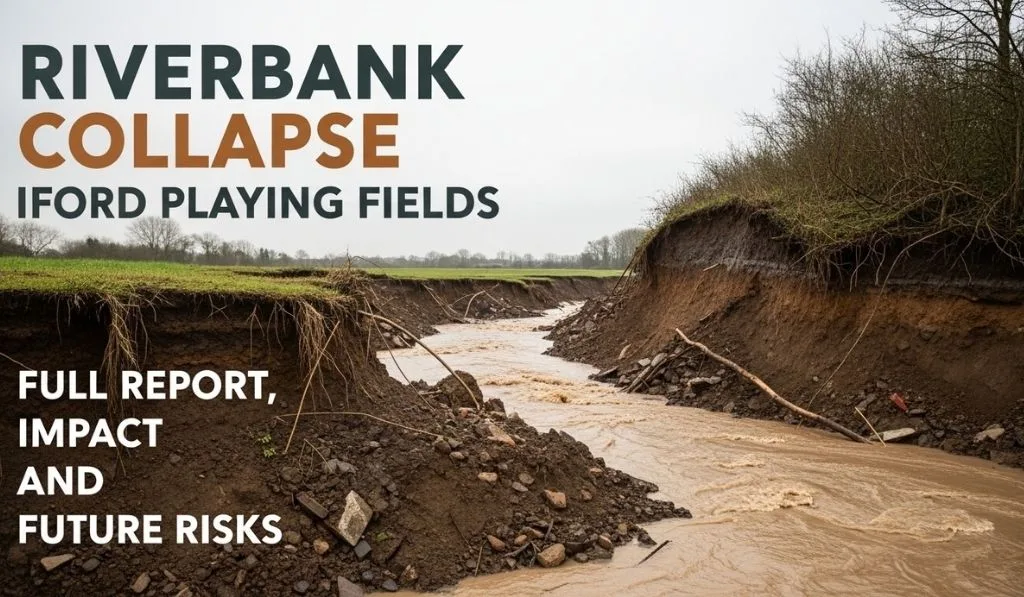
Soil types that contain fine particles and lower cohesive strength are more vulnerable to erosion and collapse. Vegetation, typically stabilising banks, failed when tree uprooting occurred due to shallow or damaged root systems. Riparian vegetation plays a critical role in holding riverbanks together. When root systems weaken, the protective effect is lost. Authorities and environmental experts recommend planting deep-rooted plants to strengthen soil stability as one solution.
Wind and Weather Conditions
Strong winds, reported around the time of the incident, may have contributed by stressing already weakened trees and soil. Mature trees near the edge can act like levers when wind pushes against them, increasing pressure on unstable ground. When roots lose their grip due to erosion or waterlogging, entire sections of the bank can collapse suddenly. Weather patterns across Dorset during mid-May to late May set the stage for the embankment failure at Iford Playing Fields. The region endured periods of heavy and prolonged rainfall that saturated the soil and weakened the riverbank’s structure.
Human Activity as a Contributing Factor
Human activity, including footpaths near the Bailey Bridge Marina, added extra pressure. Infrastructure influence from nearby bridges and drainage changes also played a role. Foot traffic close to riverside edges gradually compacts soil and reduces its ability to absorb and drain water effectively. Recreational users of the playing fields now encounter increased risk near the river, particularly in areas with steep drop-offs or exposed roots. Managing access near vulnerable riverbanks is therefore an important part of prevention.
Impact on Public Safety
The riverbank collapse Iford Playing Fields experienced transformed a popular recreational area into a public safety hazard overnight. BCP Council moved quickly to cordon off the highest-risk zones with barriers and safety signage following the incident. Walking paths near the A35 Iford Bridge were closed temporarily to prevent accidents. Some of the fallen trees now lie in the river, potentially disrupting water flow and posing hazards for paddleboarders and swimmers. The closure of key pathways disrupted the daily routines of hundreds of local residents.
Environmental and Ecological Impact
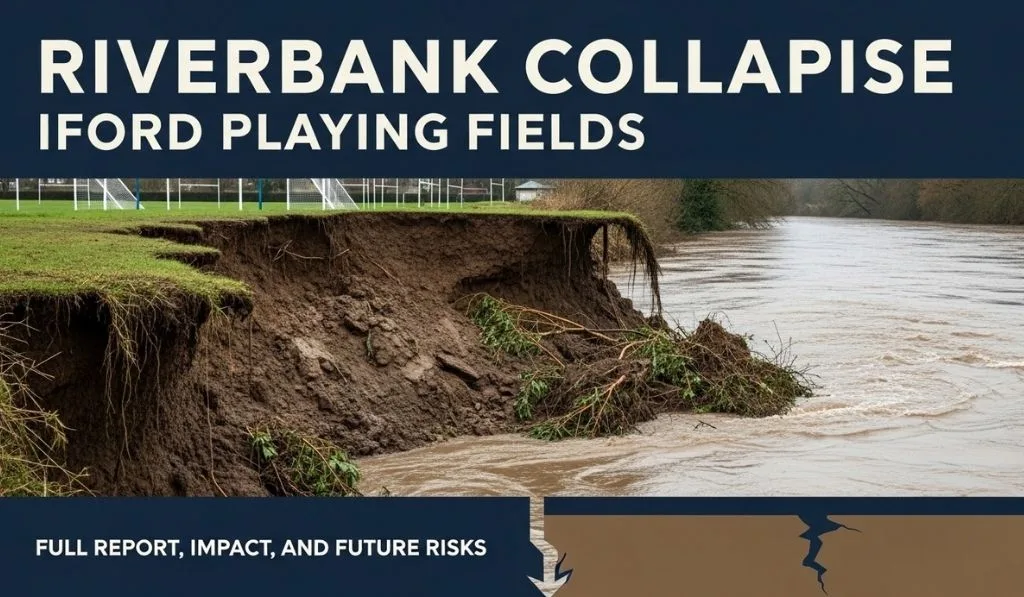
Soil and debris entering the river increase turbidity, which affects aquatic ecosystems. These changes can disrupt local biodiversity and reduce habitat health. When vegetation and trees fall into the river, the riparian habitat suffers. This habitat supports birds, insects, and small mammals. Its loss can reduce species richness and ecosystem resilience. Large woody debris and sediment can change river flow paths, potentially increasing erosion elsewhere or forming debris dams that affect water movement.
Comparison: Gradual Erosion vs Sudden Riverbank Collapse
Understanding the difference between these two processes is important for prevention and response planning.
| Feature | Gradual Erosion | Sudden Riverbank Collapse |
| Speed | Slow, over months or years | Rapid, often overnight |
| Visibility | Early signs often visible | Little or no visible warning |
| Cause | Consistent water flow | Saturated soil, wind, root failure |
| Scale of damage | Small and incremental | Large sections lost at once |
| Risk to public | Low in early stages | Immediate and serious |
| Recovery time | Gradual and manageable | Requires urgent intervention |
| Example | Mild bank narrowing | Iford Playing Fields collapse |
Who Is Most Affected?
Sporting events may be cancelled, and informal gatherings relocated elsewhere. For children, the loss proves particularly noticeable as open green spaces remain vital for play and development. Any instability along the riverbank directly affects how people can safely enjoy the fields. Path closures, fencing, and restricted access can disrupt daily routines and community activities, making the collapse more than just an environmental issue. It is a social one as well. Local sports clubs, schools, and families who depend on the site for regular activities face the greatest disruption.
Read more: Sosoactive Explained: What It Is, How It Works, and Why It Matters
Restoration and Long-Term Solutions
Restoration at Iford Playing Fields focuses on both safety and ecology. Soft engineering solutions include planting native trees and shrubs, installing biodegradable mats, and restoring vegetation networks. Where necessary, hard engineering solutions such as gabion walls and rip-rap reinforcement provide long-term protection for high-risk sections. Preventing future riverbank failure requires erosion risk mapping and long-term monitoring to detect early signs of soil slumping. Establishing buffer zones and restricting human activity near vulnerable edges reduces foot traffic impact.
The Future of Iford Playing Fields
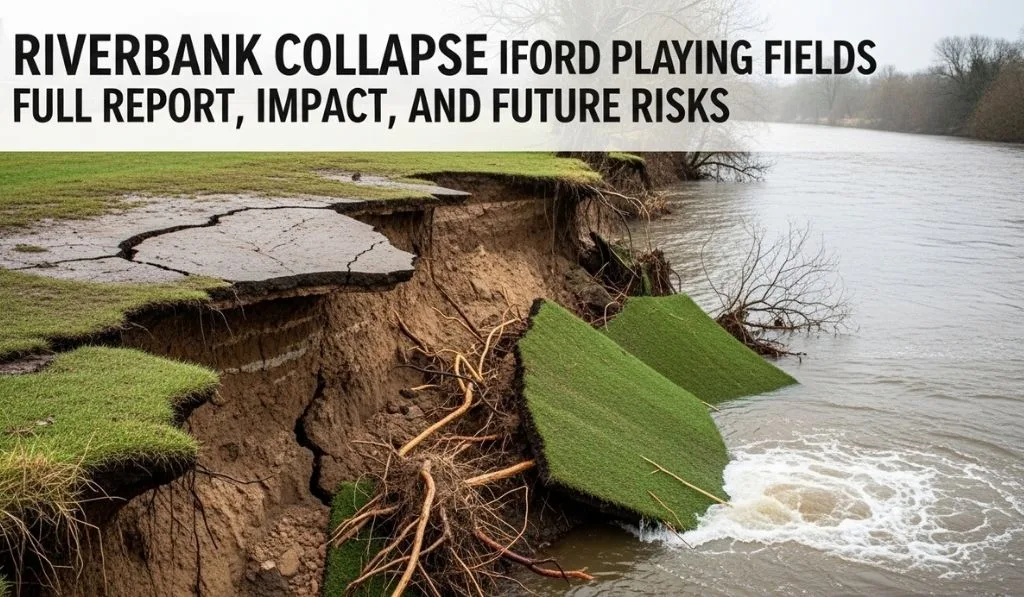
BCP Council and the Environment Agency continue monitoring the site while implementing safety barriers and planning long-term restoration. The riverbank collapse at Iford Playing Fields highlights the complex interplay between natural processes, environmental change, and public land use. This event is not just an isolated incident. It is a reminder that river systems are dynamic and that risk management, ecological stewardship, and community awareness must go hand-in-hand. Furthermore, proactive investment in sustainable riverside management is far more cost-effective than reactive repair and restoration after a sudden collapse.
Conclusion
The riverbank collapse at Iford Playing Fields serves as a powerful example of how natural forces and human pressures can combine to produce sudden environmental failure. Understanding this incident is crucial for planning stabilisation measures, preventing future collapses, and protecting the local ecosystem while maintaining safe community spaces. The event highlights the urgent need for better monitoring, responsible land management, and climate-aware planning across all UK riverside recreational areas. Recovery will take time, but with the right interventions, Iford Playing Fields can be restored as a safe and thriving community space.
Frequently Asked Questions
What is the riverbank collapse at Iford Playing Fields?
It is a sudden failure of the riverbank along the River Stour at Iford Playing Fields in Christchurch, Dorset, in which large sections of soil and mature trees collapsed into the water.
How did the riverbank collapse at Iford Playing Fields happen?
A combination of prolonged rainfall, saturated soil, root system failure, strong winds, and cumulative erosion caused the embankment to give way suddenly along the river’s edge.
Is Iford Playing Fields safe to visit?
Some areas remain accessible, but dangerous sections near the collapsed bank have been cordoned off by BCP Council with barriers and safety signage until restoration work is completed.
Who is affected by the Iford Playing Fields collapse?
Local families, dog walkers, cyclists, sports teams, and children who use the recreational space regularly are most affected by path closures and restricted access.
Where can I find more about the riverbank collapse at Iford Playing Fields?
Visit Aman Magazine for more information and in-depth coverage of UK environmental and community news.