







People come across the word kouskousi and immediately assume it is just another name for couscous. That assumption is understandable but not entirely accurate.
Kouskousi sits at a fascinating crossroads between Greek pasta tradition and North African grain culture, and understanding the difference actually makes it more interesting, not less. This guide covers what kouskousi is, where it originated, how to cook it, and why it has stayed relevant in Mediterranean kitchens for centuries.
What Is Kouskousi?
Kouskousi is a small, round pasta made from semolina wheat and water. In Greek culinary tradition, it refers specifically to tiny pearl-shaped pasta grains that are boiled and used in soups, stews, and warm vegetable dishes.
The word itself comes from the Greek term κουσκούσι, and in some Mediterranean regions it is also used as a localised transliteration of the North African dish couscous. Both share a similar appearance and a wheat base, but they are prepared differently and belong to distinct food traditions. Understanding kouskousi properly means recognising it as its own ingredient with its own history.
The Origins of Kouskousi
The roots of kouskousi stretch across two food cultures. In North Africa, couscous has been made by Berber communities in Morocco, Algeria, and Tunisia for centuries. Semolina was rolled by hand with water and salt into tiny granules, then steamed slowly over simmering broth. That method required patience and skill, and the dish became deeply tied to family life, weekly rituals, and communal eating.
Across the Mediterranean, Greek and Roman civilisations were simultaneously developing their own semolina-based foods. Small pasta shapes emerged from a practical need: they stored well, cooked fast, and stretched ingredients further.
Kouskousi in the Greek sense developed from this tradition. Trade routes and cultural exchange between North Africa and southern Europe meant these two food traditions eventually crossed paths, and the shared phonetics of their names reflect that overlapping history.
Kouskousi in Greek Cooking
In Greek households, kouskousi is a staple of home cooking rather than restaurant menus. It appears in warming soups during cooler months, cooked in chicken or vegetable broth until tender. It is also common in simple dishes with chickpeas, garlic, olive oil, and seasonal greens. The pasta absorbs surrounding flavours well, which makes it a reliable base for whatever ingredients happen to be available.
In northern Greece particularly, kouskousi features in hearty legume dishes that reflect the region’s agricultural roots. Recipes for these dishes are rarely written down. They pass from one generation to the next through observation and repetition, which is part of why kouskousi feels so tied to domestic Greek life rather than formal cuisine.
Kouskousi in North African Cooking
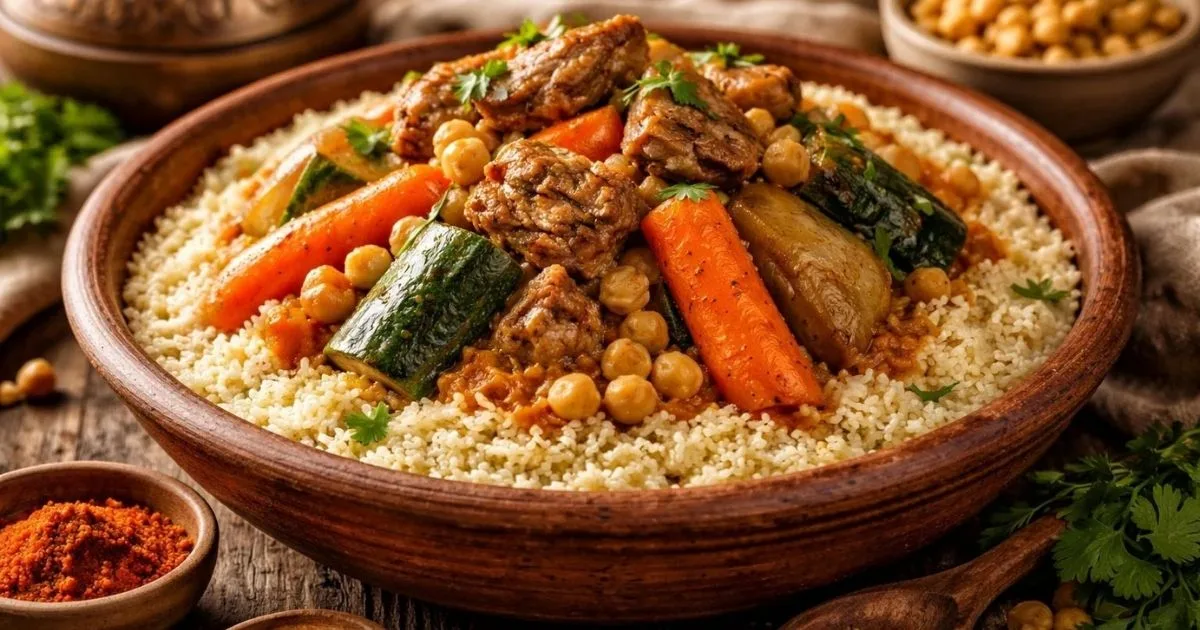
On the other side of the Mediterranean, the version known as couscous or kouskousi carries deep cultural weight. In Morocco, Algeria, and Tunisia, it is not simply food. It is a social ritual. Friday couscous is a tradition in many North African Muslim households, served as a communal meal after prayers. A large shared platter placed at the centre of the table turns eating into something collective rather than individual.
Tunisian versions tend to include harissa for heat and chickpeas for body. Moroccan preparations lean toward saffron, cumin, and slow-cooked lamb or chicken. Algerian versions vary by region, with different grains and local vegetables reflecting local agriculture. In all cases, the dish carries a sense of hospitality, care, and identity that goes well beyond its ingredients.
How Kouskousi Is Made
Traditional preparation varies depending on which version you are working with. Greek kouskousi pasta is made by forming a dough from semolina and flour, rolling it into small, consistent pearls, then drying them. Cooking is straightforward: bring salted water to the boil, add the pasta, cook until just tender, drain, and toss with olive oil or incorporate into a broth.
North African kouskousi, in the couscous tradition, starts with dry semolina granules that are steamed, not boiled. The traditional method uses a couscoussier, which is a two-part pot that allows the grain to steam above a simmering broth. The steaming process is done in stages, with the granules being raked and separated between each pass to keep them light and fluffy.
Modern shortcuts exist, including the instant method of pouring hot water or broth over dry couscous and covering it for five minutes. That method works, but the texture is noticeably different from slow-steamed couscous.
Kouskousi vs Couscous vs Orzo: What Is Actually Different?
This is the comparison most people want. Seeing them side by side clarifies things quickly.
| Feature | Greek Kouskousi | North African Couscous | Orzo |
| Base Material | Semolina and flour | Semolina | Semolina or durum wheat |
| Shape | Tiny round pearls | Tiny granules | Rice-shaped |
| Cooking Method | Boiled like pasta | Steamed | Boiled like pasta |
| Texture When Cooked | Soft, slightly chewy | Light and fluffy | Firm, chewy |
| Common Uses | Soups, stews, vegetable dishes | Stews, tagines, salads | Soups, baked dishes, salads |
| Origin | Greece | North Africa (Berber tradition) | Mediterranean |
| Gluten | Yes | Yes | Yes |
The three are related but distinct. Swapping one for another changes the texture and feel of a dish noticeably.
Nutritional Profile of Kouskousi
Kouskousi is a source of complex carbohydrates, which provide sustained energy rather than a quick spike and drop. It contains some protein and a modest amount of dietary fibre, particularly in wholegrain versions. It is low in fat on its own, and the nutritional quality of a kouskousi dish depends heavily on what it is cooked with.
Paired with chickpeas, olive oil, leafy greens, and vegetables, it becomes a genuinely balanced meal. Paired with rich meat sauces and butter, it becomes more indulgent. Because the ingredient itself is neutral, it fits into a wide range of eating styles. It is worth noting that kouskousi contains gluten and is not suitable for people with coeliac disease or wheat intolerance.
How to Cook Kouskousi at Home
Cooking Greek-style kouskousi is not complicated. Bring a pot of salted water to the boil. Add the kouskousi and cook for around eight to ten minutes, tasting as you go. Drain it, toss immediately with a little olive oil to prevent sticking, and use it as a base or add it to a broth.
For a simple Greek-inspired dish, sauté garlic in olive oil, add drained chickpeas and chopped spinach, season with salt and lemon juice, then toss with cooked kouskousi. It takes about fifteen minutes and tastes like something that took considerably longer.
For the North African version, place dry semolina in a wide bowl, pour over hot salted broth or water, cover tightly, and leave for five minutes. Rake through with a fork to separate the grains, add olive oil or butter, and serve alongside a stew or roasted vegetables.
Ways to Use Kouskousi Beyond the Basics
Most people start with soup or a simple side dish. But kouskousi works in more places than that. A cold kouskousi salad with roasted peppers, cucumber, feta, fresh mint, and lemon dressing works well for lunch in warmer months.
Baked kouskousi dishes with cheese and tomato sauce are common in Greek home cooking, similar in feel to a baked pasta. In North African tradition, sweet kouskousi with honey, cinnamon, raisins, and toasted almonds is served as a dessert or a festive treat. It holds up in grain bowls alongside roasted vegetables and a tahini dressing.
It also works as a stuffing for peppers or tomatoes in place of rice. The small size and neutral flavour mean it fits into most contexts without difficulty.
Who Should Try Kouskousi?
The honest answer is most people. It is quick to cook, easy to find in the pasta or international foods aisle of most UK supermarkets, and works with simple pantry ingredients. Home cooks looking for something beyond rice or pasta will find it genuinely useful. Anyone interested in Mediterranean or North African food will find it central to understanding those cuisines properly.
It is also a practical option for feeding a family on a budget, since a small amount stretches well in soups and stews. Children tend to accept it easily because of the soft texture and mild flavour. The only group it does not suit is people managing gluten intolerance or wheat allergies.
Read also: HMS Photovoltaik Explained: Smart Solar Energy and How It Works
Common Mistakes When Cooking Kouskousi
The most frequent error is overcooking. Kouskousi softens quickly, and leaving it in water too long makes it sticky and heavy. The second common mistake is treating it exactly like couscous and trying to steam it when the Greek pasta version needs boiling. The third is under-seasoning.
The grain itself is mild, so the cooking water or broth needs to be properly salted, and the finished dish benefits from a generous amount of olive oil, lemon, or herb flavouring. People who try kouskousi for the first time and find it bland have usually not added enough seasoning at the right stage.
Where to Find Kouskousi in the UK
Greek kouskousi is available in most larger supermarkets, usually in the pasta aisle or the world foods section. It may be labelled as kouskousaki, Greek pasta pearls, or simply listed under the brand name. Mediterranean food shops and Greek delis carry it more consistently. North African couscous is easier to find and sold widely under numerous brands across all major UK supermarkets.
Online options through Amazon or specialist food retailers cover both variations. When buying, check the label carefully, because the Greek pasta version and the North African steamed version require different cooking methods and produce different results.
The Cultural Weight Kouskousi Carries
Food is rarely just food. Kouskousi in both its Greek and North African forms carries stories about who grew the wheat, who rolled the granules, and who sat around the table. In North Africa, the Friday couscous tradition connects families across generations through a shared weekly ritual.
In Greek villages, kouskousi dishes are passed down without recipes, learned by standing beside an older cook and watching. That kind of knowledge does not survive in a packet. It survives because people keep cooking it, keep sharing it, and keep connecting it to home. For anyone eating kouskousi for the first time, that history is part of what is on the plate.
Conclusion
Kouskousi is one of those ingredients that rewards a second look. It is easy to dismiss as just a smaller version of something already familiar, but the reality is more interesting than that. Whether the Greek pasta version boiled into a warming soup or the North African semolina version steamed slowly over an aromatic broth, kouskousi sits at the centre of two food traditions with deep roots and real staying power.
It cooks quickly, adapts easily, and tastes like it belongs on the table. That combination is hard to argue with.
Frequently Asked Questions
What is kouskousi?
Kouskousi is a small, round pasta made from semolina wheat, originating from Greek culinary tradition, though the term is also used in reference to North African couscous in some Mediterranean regions.
How does kouskousi differ from couscous?
Greek kouskousi is a pasta that is boiled in water, while traditional North African couscous is steamed; both come from semolina wheat but differ in texture, preparation, and culinary tradition.
Is kouskousi healthy?
It is a reasonable source of complex carbohydrates and can form part of a balanced diet, particularly when paired with vegetables, legumes, and olive oil, though it does contain gluten and is not suitable for those with wheat intolerance.
Who can use kouskousi?
Anyone looking to explore Mediterranean or North African cooking will find kouskousi a practical and versatile ingredient, suitable for soups, salads, baked dishes, and even desserts.
Read also: Recyclatanteil Explained: What It Means and Why It Matters for Sustainable Production