







Choosing the right roofing material is one of the most important decisions a builder or homeowner can make. Traditional materials like glass, metal, and asphalt tiles each come with significant drawbacks.
Many people struggle to find a solution that is lightweight, durable, and allows natural light inside. Acryldach has emerged as a leading answer to this problem.
This guide explains exactly what acryldach is, how it works, and why it is gaining widespread adoption across the UK and Europe. By the end, readers will have a clear understanding of its types, benefits, limitations, and real-world uses.
What Is Acryldach?
Acryldach is a roofing system made from acrylic materials, primarily Polymethyl Methacrylate (PMMA). The term combines two parts: “Acryl,” referring to acrylic plastic, and “Dach,” the German word for roof. Together, these words describe an acrylic roof structure rather than a branded product.
Acryldach covers a wide range of roofing formats, including rigid transparent panels, corrugated sheets, multiwall systems, and liquid-applied membranes. It is used in residential homes, commercial buildings, greenhouses, and public infrastructure. The material is valued for its optical clarity, weather resistance, and lightweight characteristics.
Origin and History of Acryldach
The material foundation of acryldach, PMMA, was first developed in the early 1920s. Scientists discovered that polymethyl methacrylate could replace glass in many applications due to its transparency and lighter weight. The roofing application of acrylic materials became more common in German-speaking countries, where the term “Acryldach” was coined.
Over decades, manufacturing improvements enhanced UV resistance and durability, making acrylic roofing far more reliable. Today, acryldach solutions are used across Europe, Asia, and increasingly in the United Kingdom. Its popularity has grown alongside demand for energy-efficient and sustainable building materials.
How Acryldach Works
Acryldach panels are manufactured from PMMA, a thermoplastic polymer known for its transparency and structural stability. The panels are formed into flat sheets, corrugated designs, or hollow multiwall structures depending on the intended use. Light passes through the acrylic material at a transmission rate of up to 92%, which closely rivals glass.
UV stabilisers are added during manufacturing to prevent yellowing and surface degradation. The panels are mounted onto metal or wooden support frames and sealed at joints to prevent water ingress. This construction method ensures both weather protection and maximum daylight entry.
Types of Acryldach Panels
Several distinct types of acryldach products are available on the market today.
Flat acrylic sheets are the most basic form. They are used in skylights, canopies, and covered walkways where a clean visual appearance is required.
Corrugated acrylic panels feature a wave-shaped profile that increases mechanical strength. They are commonly used in industrial buildings, sheds, and warehouses. The rigid design also improves rainwater drainage.
Twinwall and multiwall panels contain hollow air chambers within their structure. These chambers trap air, improving thermal insulation significantly. They are the preferred choice for greenhouses and cold-climate applications.
Liquid-applied acrylic coatings are a fourth category entirely. These are not panels but membranes rolled or sprayed onto flat or low-slope roofs. They cure into a seamless waterproof barrier and are widely used in commercial roofing.
Key Material Properties of PMMA
PMMA delivers a set of physical properties that make it highly suitable for roofing applications. First, it achieves up to 92% light transmission, nearly matching high-quality glass. Second, it weighs approximately half as much as glass of equivalent thickness. Third, UV stabilisers prevent yellowing, which is a common problem with cheaper plastics.
Fourth, PMMA resists moisture, mold, and many chemical agents. Fifth, the material is impact-resistant and does not shatter into sharp fragments like glass. These properties together explain why architects and builders increasingly specify acryldach for modern construction projects.
Benefits of Acryldach Roofing
Acryldach offers a wide range of practical advantages for both homeowners and commercial developers.
Natural light transmission is perhaps its most celebrated benefit. Buildings fitted with acryldach roofing receive abundant daylight, reducing the need for artificial lighting during daytime hours. This directly lowers electricity consumption.
Lightweight structure reduces the load placed on building frameworks. This simplifies structural design and can lower overall construction costs.
Weather resistance is another key advantage. High-quality acrylic panels withstand rain, hail, snow, strong winds, and temperature fluctuations reliably.
Long service life is well established. Properly installed acryldach panels typically last between 20 and 30 years with minimal maintenance required.
Safety is also noteworthy. Unlike glass, acrylic panels do not break into dangerous shards when damaged. This makes acryldach safer in both public and residential environments.
Real-World Applications of Acryldach
Acryldach is used across a broad range of settings, demonstrating its versatility as a roofing material.
In residential construction, it appears in patios, carports, verandas, covered terraces, and home skylights. Homeowners choose it to bring light into darker areas of a property.
In commercial buildings, shopping centres, restaurants, and office atria commonly feature acryldach roofing. The material creates bright, appealing interior spaces that attract customers and improve worker comfort.
In agriculture and horticulture, greenhouses rely heavily on acrylic panels. The high light transmission supports plant growth while the UV filtering properties protect against harmful radiation.
In public infrastructure, bus shelters, railway station canopies, and covered walkways frequently use acryldach. Its durability and weather resistance make it ideal for high-traffic public environments.
In industrial buildings, acrylic skylights are installed in factory roofs and warehouse ceilings to reduce reliance on artificial lighting and improve worker conditions.
Acryldach and Energy Efficiency
Energy efficiency is one of the strongest arguments for choosing acryldach in modern construction. Buildings with acryldach skylights or roof panels receive natural daylight throughout the day, directly reducing electricity use.
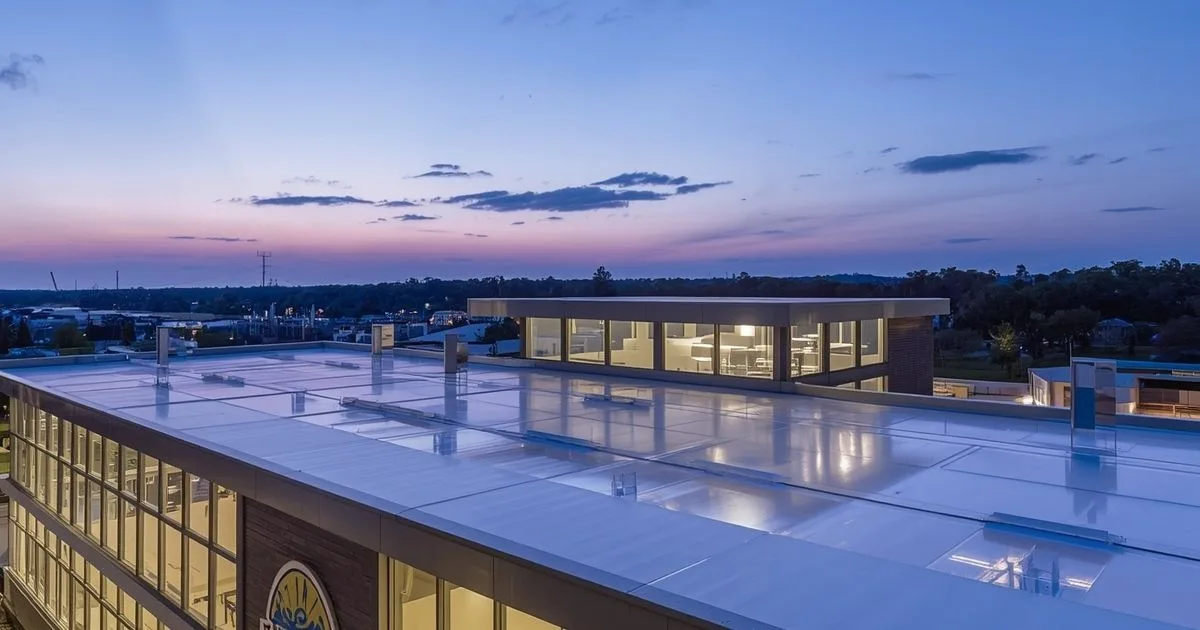
Multiwall panel designs offer additional thermal insulation by trapping air within their hollow chambers. This reduces heat loss during colder months and keeps interior temperatures more stable. Liquid acrylic roof coatings reflect solar radiation away from flat roofs, lowering cooling costs significantly in warmer months.
Many acryldach solutions contribute to energy performance certificates and sustainable building ratings. As a result, developers and architects increasingly consider acrylic roofing a practical component of green building design.
Installation Process for Acryldach
Installing acryldach correctly requires careful planning and skilled execution. The process generally follows these stages.
The first step is site measurement and planning. The roofing area is assessed and the correct panel type and thickness are selected based on the application.
The second step is framework construction. A support frame made from aluminium, steel, or treated timber is installed. The frame must accommodate thermal expansion of the acrylic panels.
The third step is cutting and panel placement. Acrylic sheets are cut using fine-toothed saws designed for plastics. Panels are positioned carefully to avoid scratches.
The fourth step is fixing and sealing. Corrosion-resistant screws with neoprene washers are used to attach panels. Silicone seals are applied at all joints to prevent water leakage.
Professional installation is strongly recommended for larger or structural applications to ensure long-term performance and warranty validity.
Acryldach vs Alternative Roofing Materials
Selecting the right transparent roofing material requires understanding the trade-offs between available options.
| Feature | Acryldach (PMMA) | Polycarbonate | Glass | Metal Sheeting |
| Light Transmission | Up to 92% | Up to 88% | Up to 90% | Opaque |
| Weight | Lightweight | Very lightweight | Heavy | Medium |
| Impact Resistance | Good | Excellent | Poor | Very good |
| UV Resistance | Excellent | Moderate | Requires coating | N/A |
| Clarity Over Time | Excellent | Can yellow | Excellent | N/A |
| Insulation | Good (multiwall) | Good (multiwall) | Poor | Poor |
| Lifespan | 20 to 30 years | 10 to 20 years | 30 plus years | 20 to 40 years |
| Cost | Medium to high | Low to medium | High | Low to medium |
Acryldach offers superior optical clarity and UV stability compared to polycarbonate. It is significantly lighter and safer than glass. Metal sheeting cannot deliver the light transmission that acryldach provides. The choice between materials depends on budget, climate, and the specific design requirement.
Who Should Use Acryldach?
Acryldach is suitable for a wide range of users and project types. Homeowners planning patios, carports, or garden rooms benefit from its light transmission and weather resistance. Commercial property developers use it to create bright interior spaces that reduce operational energy costs.
Agricultural businesses rely on acryldach for greenhouse constructions that maximise crop growth. Architects and builders working on public infrastructure projects value its safety profile and durability. It is also a strong choice for anyone seeking to improve the energy efficiency of an existing flat roof through liquid acrylic coating systems.
Generally, acryldach suits any project where natural light, lightweight materials, and long-term durability are important priorities.
Risks, Limitations, and Challenges
Acryldach is not without drawbacks. Understanding these limitations helps buyers make informed decisions.
Cost is a notable factor. High-quality PMMA panels are more expensive than standard asphalt shingles or basic metal sheets. The initial investment is higher, though long-term savings on energy and maintenance can offset this.
Scratch sensitivity is a known issue. Acrylic surfaces scratch more easily than glass or polycarbonate. Care is required during installation and cleaning to avoid surface damage.
Thermal expansion must be managed properly during installation. PMMA expands and contracts with temperature changes. Failure to allow for this movement can cause panels to buckle or crack over time.
Impact resistance is good but not exceptional. Polycarbonate outperforms acrylic in high-impact scenarios. Therefore, acryldach may not be the best choice in areas with frequent heavy hailstorms.
Maintenance Tips for Acryldach Roofing
Acryldach panels require minimal but consistent maintenance to preserve performance and appearance. Cleaning should be done with lukewarm water and a mild soap solution applied with a soft cloth or sponge.
Abrasive cleaners, solvents, and hard brushes must be avoided as they will scratch the surface. Joints and seals should be inspected annually for signs of cracking or deterioration and resealed as necessary. Snow accumulations on flat acrylic roofs should be removed carefully using a soft brush.
Periodic inspection of fixing screws and support frames helps prevent structural issues developing over time. Following these simple steps ensures a long and reliable service life.
The Future of Acryldach
The outlook for acryldach in modern construction is positive. Demand for lightweight, energy-efficient, and transparent roofing continues to rise across residential and commercial sectors.
Manufacturers are developing advanced PMMA formulations with improved impact resistance and even better UV stability. Self-cleaning nano-coatings are being applied to acrylic panels to reduce maintenance requirements further.
Recycled and recyclable acrylic materials are entering the market, supporting sustainability goals in the construction industry. Furthermore, integration of acryldach roofing with solar film technology is being explored, which could allow roof panels to generate electricity while still transmitting light.
As green building standards tighten across the UK and Europe, acryldach is well positioned to grow significantly in the years ahead.
Conclusion
Acryldach represents a modern, practical, and visually appealing solution for a wide range of roofing challenges. Its foundation in high-performance PMMA gives it a compelling combination of optical clarity, weather resistance, lightweight handling, and long service life.
Whether used as transparent panels for a home patio, corrugated sheets for an industrial warehouse, or liquid coatings for a flat commercial roof, acryldach delivers consistent value. The material does come with a higher initial cost and requires careful installation to manage thermal expansion.
However, its energy-saving potential and durability make it a sensible long-term investment for most applications. Understanding the different types, applications, and maintenance requirements covered in this guide allows builders, homeowners, and developers to choose the right acryldach solution with confidence.
Frequently Asked Questions
What is acryldach?
Acryldach is a roofing system made from acrylic (PMMA) materials, available as rigid transparent panels or liquid-applied coatings, used to provide natural light transmission and weather protection in buildings.
How does acryldach work?
Acryldach panels are manufactured from PMMA and mounted onto support frames, allowing up to 92% of natural light to pass through while protecting the building from rain, wind, UV radiation, and temperature changes.
Is acryldach a safe roofing material?
Yes, acryldach is considered safe because PMMA does not shatter into sharp fragments like glass, is non-toxic, and is resistant to mold and corrosion, making it suitable for both residential and public structures.
Who can benefit most from acryldach?
Homeowners, commercial developers, greenhouse operators, architects, and infrastructure builders all benefit from acryldach where natural light, lightweight construction, and long-term weather resistance are required.
Read also: Giniä Explained: What It Means and Why Inequality Matters