







Few creatures in the natural world inspire as much curiosity as chameleónovité. These extraordinary reptiles possess a set of biological tools so advanced that scientists continue to study them today. Many people recognise chameleons only by their colour-changing skin. However, chameleónovité is far more complex than that single ability. This guide covers their habitat, physical traits, behaviour, diet, ecological role, and the conservation challenges they face.
What Are Chameleónovité?
Chameleónovité is the Slovak and Czech taxonomic term for the family Chamaeleonidae, the biological group commonly known as chameleons. This family belongs to the order Squamata, which includes lizards and snakes. There are over 200 recognised species within this family, classified under genera such as Chamaeleo, Furcifer, and Trioceros. Each species has evolved specific traits suited to its environment. Chameleónovité are defined by a shared set of anatomical features that set them apart from all other reptiles.
Origins and Evolutionary History
The fossil record suggests chameleons have existed for at least 26 million years. Early ancestors are thought to have originated in Africa before spreading across continents. Madagascar became an evolutionary hotspot for chameleónovité, hosting over half of all known species. The island’s geographic isolation allowed unique adaptations to develop over millions of years. This evolutionary history explains the extraordinary diversity seen across the family today.
Geographic Distribution and Natural Habitat
Chameleónovité are found across a wide range of regions. The majority live in sub-Saharan Africa and Madagascar. Smaller populations exist in southern Europe, the Middle East, and South Asia. Each region hosts species adapted to local conditions.
Their preferred environments include:
- Tropical rainforests with dense canopy cover
- Dry savannah and semi-arid scrubland
- Montane forests at higher altitudes
- Coastal vegetation and grassland fringes
Madagascar alone accounts for roughly 110 species, making it the global centre of chameleónovité biodiversity.
Iconic Physical Traits of Chameleónovité
Chameleónovité possess several physical features that are unique among reptiles. These traits have evolved for very specific survival purposes.
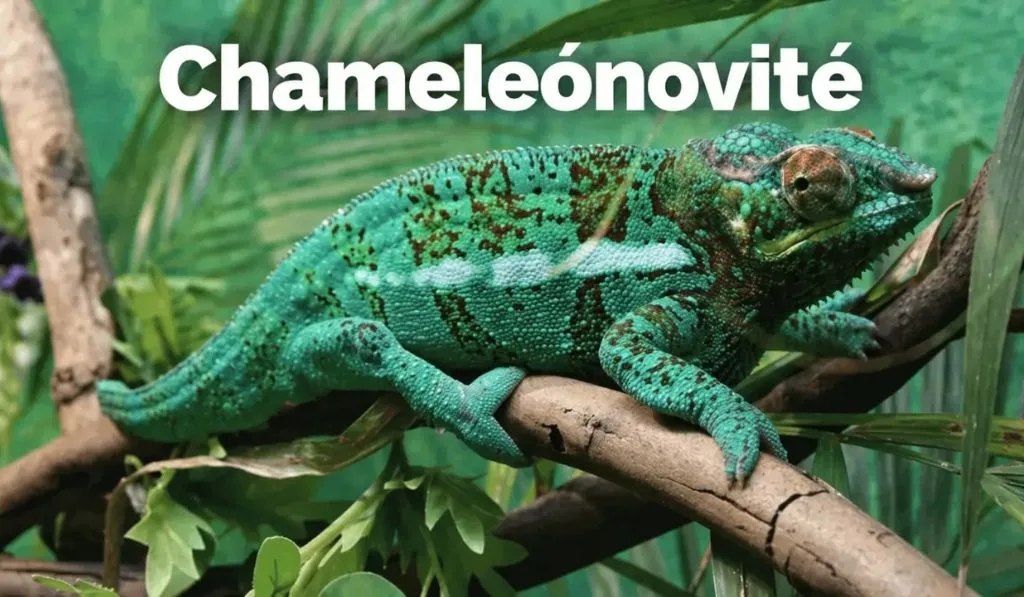
Their laterally compressed body allows them to move through dense branches with ease. Their zygodactyl feet, in which toes are fused into opposing groups, provide a vice-like grip on branches. The prehensile tail functions as a fifth limb, wrapping around branches for stability. Each of these traits reflects a species fully adapted to arboreal life.
The Colour-Changing Mechanism Explained
The colour-change ability of chameleónovité is one of the most studied phenomena in zoology. The process is not pigment-based in the traditional sense. Instead, it relies on specialised cells called iridophores, which contain nanocrystals. These nanocrystals reflect light differently depending on the spacing between them. When a chameleon is calm, the crystals are packed closely and reflect shorter blue wavelengths. Under excitement or stress, the crystals spread apart and shift towards red and yellow tones. This is a structural colour mechanism, similar in principle to how a soap bubble creates colour. Structural coloration of this kind is rare among vertebrates and represents a significant area of biological research.
Independent Eye Movement and Visual Capability
Chameleónovité possess highly specialised eyes. Each eye can rotate independently through a range of approximately 180 degrees horizontally and 90 degrees vertically. This gives them a near-total field of vision without moving their head. Both eyes can also focus together on a single point when targeting prey, providing accurate depth perception. Additionally, chameleónovité can detect ultraviolet light. This UV sensitivity plays a role in social communication and mate selection that is invisible to the human eye.
Tongue Speed and Hunting Precision
The tongue of a chameleón is one of the most effective hunting tools in the reptile world. It can extend to more than one and a half times the animal’s body length. The launch speed has been recorded at over 6 metres per second in some species. A sticky pad at the tip creates suction to capture prey on contact. The entire projection and retraction cycle takes less than a tenth of a second. This precision allows chameleónovité to hunt without moving their body, which reduces the risk of detection.
Diet and Feeding Behaviour
Chameleónovité are primarily insectivorous. Their diet consists mainly of crickets, locusts, grasshoppers, flies, and caterpillars. Larger species, such as the Parson’s chameleon (Calumma parsonii) of Madagascar, occasionally consume small vertebrates including young birds and small lizards. Some species supplement their diet with plant matter and moisture from leaves. In captive settings, dietary variety is important for nutritional balance. In the wild, feeding frequency depends on prey availability and ambient temperature.
Behaviour, Social Structure and Communication
Most chameleónovité are solitary animals. They are highly territorial and will actively defend their space against rivals of the same species. Communication between individuals occurs largely through colour display. Bright, vivid patterns often signal dominance or readiness to mate. Darker, subdued tones can indicate stress, submission, or illness. Males will engage in visual displays before resorting to physical confrontation. Females signal receptiveness or rejection through colour changes as well. This colour-based communication system is among the most developed in the reptile world.
Reproduction and Life Cycle
Reproductive strategies among chameleónovité vary across species. The majority are oviparous, meaning they lay eggs. Females dig burrows in soil to deposit clutches that can range from 2 eggs in smaller species to over 80 in larger ones. Incubation periods vary significantly and can last anywhere from 4 months to over 2 years depending on species and soil conditions. A smaller number of species are viviparous, giving birth to live young enclosed in transparent membranes. This adaptation is common in species living in cooler montane environments where soil incubation is less reliable.
Chameleónovité vs. Other Lizard Families: A Comparison
| Feature | Chameleónovité (Chamaeleonidae) | Agamidae (Agamas) | Gekkonidae (Geckos) |
| Colour change | Advanced (iridophore-based) | Limited | Minimal |
| Eye movement | Fully independent | Limited rotation | Forward-facing |
| Tongue projection | Long, rapid, sticky | Short | Short |
| Foot structure | Zygodactyl (branch grip) | Standard digits | Adhesive toe pads |
| Habitat preference | Arboreal | Ground and rock | Ground and walls |
| Social behaviour | Solitary, territorial | Variable | Mostly solitary |
| UV vision | Yes | Yes | Yes |
This comparison highlights that chameleónovité occupy a unique biological niche. No other lizard family combines all of these traits simultaneously.
Role in the Ecosystem
Chameleónovité plays an important ecological role. As insect predators, they help regulate populations of pest species. This contributes to the stability of plant communities and agricultural zones near their habitats. They also serve as prey for larger predators including birds of prey, snakes, and mammals. As a result, their presence supports food web balance. Furthermore, they function as bioindicators. Population declines in chameleónovité often signal wider environmental degradation such as deforestation, habitat fragmentation, or climate shifts.
Threats and Conservation Challenges
Many species within chameleónovité face serious conservation pressures. Habitat loss from deforestation is the primary threat, particularly in Madagascar where forest cover continues to decline. The illegal pet trade removes wild individuals from their natural populations, disrupting breeding cycles. Climate change alters rainfall patterns and temperature ranges, affecting both habitat suitability and prey availability. The IUCN Red List currently classifies numerous chameleónovité species as Vulnerable, Endangered, or Critically Endangered. Conservation efforts include protected area expansion, captive breeding programmes, and international trade regulations under CITES.
Read more: Newsakmi Explained: What It Is, How It Works, and Why It Matters
Tips for Responsible Engagement with Chameleónovité
For those who encounter chameleónovité in the wild or keep them in captivity, responsible behaviour is essential.
- Avoid handling wild chameleons, as stress can suppress their immune system
- Support conservation organisations working in Madagascar and Africa
- If purchasing a captive chameleon, verify it was bred in captivity, not wild-caught
- Maintain appropriate humidity, temperature, and UVB lighting in captive setups
- Report any illegal trade activity to relevant wildlife authorities
Ethical engagement protects both individual animals and broader wild populations.
The Future of Chameleónovité Research
Scientific interest in chameleónovité continues to grow. Researchers are studying their iridophore cells for applications in materials science and adaptive camouflage technology. The UV communication systems of chameleons are informing studies in animal cognition and sensory biology. Genetic mapping of Madagascar’s many endemic species is helping to identify previously unknown populations and subspecies. Conservation genomics is also being used to inform breeding programmes and protect genetic diversity. The future of chameleónovité research is closely tied to the future of biodiversity science itself.
Conclusion
Chameleónovité represents one of the most specialised and scientifically significant families of reptiles on Earth. Their colour-change mechanism, independent vision, precision hunting, and complex social communication make them extraordinary subjects of study. Beyond their biological fascination, they serve vital ecological functions and act as indicators of environmental health. Understanding chameleónovité more fully highlights how much depends on protecting the habitats they call home.
Frequently Asked Questions
What are chameleónovité?
Chameleónovité is the taxonomic term for the family Chamaeleonidae, a group of over 200 reptile species commonly known as chameleons.
How does the colour change in chameleónovité work?
Colour change is produced by specialised iridophore cells containing nanocrystals that reflect different wavelengths of light depending on their spacing, shifting colour with the animal’s mood or temperature.
Are chameleónovité safe to keep as pets?
Some species can be kept in captivity, but they have complex environmental needs and high stress sensitivity, so they require experienced owners and should always be sourced from reputable captive breeders.
Who can benefit from learning about chameleónovité?
Wildlife enthusiasts, biology students, conservationists, and anyone interested in reptiles or evolutionary biology will find chameleónovité a rich and rewarding subject.
Where can I find more about chameleónovité?
Visit Aman Magazine at amanmagazine.co.uk for more informational guides on wildlife, science, and the natural world.