







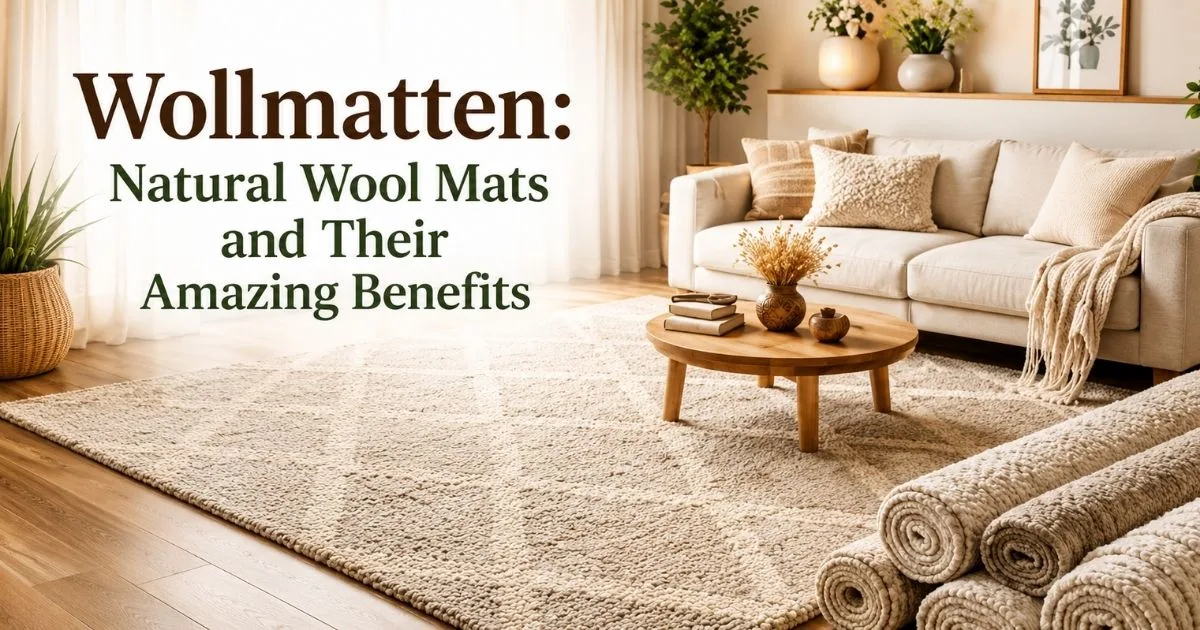
Floors are one of the most overlooked elements of a healthy and comfortable home. Many people settle for synthetic mats that trap heat, emit chemicals, and wear out within a few years. As awareness of sustainable living grows, natural alternatives are gaining serious attention. Wollmatten, the German word for wool mats, have been used for centuries across Europe and Asia.
Today, they are re-emerging as one of the most intelligent choices for homeowners, designers, architects, and eco-conscious consumers. This guide covers everything there is to know about wollmatten in 2026, including their history, types, benefits, uses, care tips, and buying advice.
What Are Wollmatten?
Wollmatten are mats produced from natural sheep wool fibers, processed through techniques such as felting, weaving, or compression into dense, durable textile surfaces. The term comes from German, where “woll” means wool and “matten” means mats.
Unlike synthetic alternatives made from polyester, PVC, or foam, wollmatten are built from a renewable, biodegradable natural fiber that has been used by humans for thousands of years. Each wollmatte begins as raw wool that is cleaned, carded to align the fibers uniformly, and then shaped into its final form. The result is a product that is soft underfoot, naturally insulating, moisture-regulating, and free from harmful chemicals.
The History and Origin of Wollmatten
The history of wollmatten stretches back thousands of years, rooted in civilizations that depended on sheep farming for warmth, shelter, and trade. Nomadic tribes in Central Asia used felted wool mats inside yurts to insulate against extreme cold and rough terrain.
In medieval Europe, especially in Germany, Austria, and Scandinavia, wool mats were placed on stone floors during harsh winters to provide warmth and comfort. These early mats were primarily practical, designed to insulate cold surfaces and improve indoor living conditions.
Over time, as weaving techniques evolved and natural dyes became available, wollmatten began to serve decorative purposes as well. Persian and Middle Eastern cultures produced mats featuring intricate geometric patterns and rich colors that carried cultural identity. In Alpine regions, handwoven wool mats became associated with craftsmanship and heritage, often passed down through generations as household heirlooms. In many communities, gifting a wool mat at a wedding or housewarming was a sign of honor and good fortune.
Industrialisation brought machine-made wool mats to a wider audience, but the handcrafted tradition never disappeared. Today, wollmatten represent a bridge between ancient textile knowledge and modern sustainability values, making them relevant for both traditional and contemporary settings.
How Wollmatten Are Made: The Production Process
Understanding how wollmatten are made helps explain why they perform so well. The production process begins with careful selection of raw wool, sourced from sheep that are shorn seasonally, a humane and natural process. High-quality wollmatten use pure wool, though some manufacturers blend in minimal natural fibers for added durability.
The production steps are as follows. First, the raw wool is cleaned through a process called scouring to remove dirt, lanolin, and impurities. Next, the wool undergoes carding, which aligns the fibers uniformly to create a consistent and strong structure. After carding, the fibers are shaped using one of three core methods: felting, weaving, or needle-punching.
Felted wollmatten are produced by compressing wool with heat, moisture, and pressure until the fibers bond into a dense, seamless surface. Woven wollmatten are created on looms, allowing for intricate patterns and greater thickness variation. Needle-punched mats are mechanically processed for high flexibility and industrial applications.
Finally, some wollmatten are dyed using eco-friendly natural dyes, trimmed, and finished with edge binding. Each stage preserves the natural structure of the wool fiber, ensuring the mat retains its insulating, moisture-regulating, and resilient properties throughout its long lifespan.
Types of Wollmatten
Wollmatten are not a single product. They exist in several distinct forms, each suited to different purposes.
Filz-Wollmatten (Felted Wool Mats): These are thick, dense mats made by compressing wool fibers together without weaving. They are highly durable and resistant to wear and tear, making them ideal for high-traffic areas, entryways, and children’s rooms.
Gewebte Wollmatten (Woven Wool Mats): Crafted by interlacing wool fibers on a loom, these mats offer more flexibility in thickness, size, and pattern design. They can feature simple solid colors or complex geometric designs and are popular as decorative rugs in living rooms and bedrooms.
Shaggy Wollmatten (Long-Pile Wool Mats): These feature long, fluffy fibers that provide a plush, soft feeling underfoot. They are popular in bedrooms and relaxation spaces where comfort is the top priority.
Nadelfilz-Wollmatten (Needle-Punched Mats): Produced using mechanical needle punching, these mats offer increased flexibility and are used widely in acoustic and thermal insulation applications in construction and commercial buildings.
Garten-Wollmatten (Garden Wool Mats): Used in landscaping and horticulture, these mats promote soil stability, retain moisture, suppress weed growth, and naturally biodegrade into the ground without leaving harmful residue.
Key Benefits of Wollmatten
The growing popularity of wollmatten is not accidental. These mats offer a combination of benefits that synthetic alternatives simply cannot match.
Thermal Insulation: Wool fibers naturally trap air within their microscopic crimped structure, creating a powerful insulating barrier. This helps maintain consistent indoor temperatures, keeping floors warm during winter and comfortable during summer without relying on additional heating or cooling.
Acoustic Insulation: The dense fiber structure of wollmatten absorbs sound waves, reducing echo and noise transmission between floors and rooms. Many recording studios, offices, and residential spaces now use wollmatten specifically for soundproofing purposes.
Moisture Regulation: Wool can absorb up to 30 percent of its own weight in moisture without feeling damp to the touch. Wollmatten regulate indoor humidity levels naturally, helping prevent condensation, mold growth, and the musty odors that often develop under synthetic floor coverings.
Air Quality Improvement: Wool’s unique keratin protein structure chemically binds indoor air pollutants such as formaldehyde, nitrogen oxide, and sulphur dioxide, preventing them from circulating in the living environment. Studies suggest that rooms insulated with wool mats can have significantly fewer airborne toxins compared to rooms using synthetic materials.
Hypoallergenic Properties: Wool fibers trap dust, pet dander, and allergens within their structure rather than releasing them back into the air. This makes wollmatten a practical choice for individuals with asthma, allergies, or respiratory sensitivities.
Natural Flame Resistance: Wool is naturally flame resistant without requiring chemical treatments. It does not melt or drip when exposed to flame, making wollmatten a safer option in residential and commercial settings.
Durability and Longevity: High-quality wollmatten can last 20 to 30 years or more with proper care. Wool fibers are naturally elastic, meaning they bounce back after compression and maintain their shape over time. This longevity makes wollmatten a cost-effective long-term investment.
Biodegradability: At the end of their lifecycle, wollmatten decompose naturally without releasing microplastics or toxic residues into the soil. This stands in stark contrast to synthetic mats, which can take hundreds of years to break down in landfill.
Read also: Debby Clarke Belichick Revealed: The Full Story Behind the Name
Wollmatten vs Synthetic Mats: A Clear Comparison
| Feature | Wollmatten | Synthetic Mats (PVC / Polyester) |
| Material Source | Natural sheep wool | Petroleum-based chemicals |
| Thermal Insulation | Excellent, natural | Moderate, often traps heat |
| Acoustic Performance | High sound absorption | Low, minimal noise reduction |
| Moisture Control | Absorbs and releases naturally | Traps moisture, promotes mold |
| Air Quality | Absorbs indoor toxins | May off-gas chemicals |
| Hypoallergenic | Yes, traps allergens safely | No, can release particles |
| Flame Resistance | Natural, no chemicals needed | Requires chemical treatment |
| Lifespan | 20 to 30 years with care | 3 to 7 years average |
| Environmental Impact | Renewable, biodegradable | Non-biodegradable, polluting |
| Cost | Higher upfront investment | Lower initial cost |
Real-World Uses and Applications of Wollmatten
One of the most compelling qualities of wollmatten is their versatility. They serve practical and aesthetic purposes across a wide range of settings.
In residential homes, wollmatten are used as floor rugs in living rooms, bedrooms, hallways, and entryways. They add warmth and texture to minimalist, Scandinavian, and traditional interior styles alike. Many homeowners also use them as underlays beneath other floor coverings to improve insulation and comfort.
In construction and architecture, wollmatten are used as thermal insulation panels in walls, roofs, and underfloor systems. Architects and green building consultants increasingly specify wool-based insulation as an eco-friendly alternative to synthetic foam or fiberglass.
In yoga and wellness spaces, wollmatten provide natural cushioning, grip, and breathability. Many practitioners prefer them over rubber or PVC yoga mats because they feel softer, do not emit synthetic odors, and create a more grounded connection to natural materials.
In garden and horticulture settings, wollmatten retain soil moisture, suppress weed growth, regulate soil temperature, and naturally enrich the ground as they biodegrade. They require no chemical herbicides and are safe for organic growing environments.
In offices and commercial buildings, needle-punched wollmatten are installed as acoustic panels and underfloor padding to reduce noise, improve air quality, and create more comfortable working environments.
Who Should Choose Wollmatten?
Wollmatten suit a wide range of buyers and contexts. Homeowners seeking long-lasting, low-toxin floor coverings will find them an excellent alternative to synthetic rugs. Parents of young children benefit from the hypoallergenic and non-toxic properties of wool. People with allergies or respiratory conditions will appreciate wool’s ability to trap rather than release allergens.
Yoga practitioners, meditation enthusiasts, and wellness-focused individuals will find wollmatten a natural and supportive surface for practice. Architects, builders, and interior designers working on sustainable or green-certified projects will find wollmatten meet both performance and environmental standards.
How to Care for Wollmatten
Proper maintenance extends the life of wollmatten significantly. The following steps keep wool mats in excellent condition for decades.
Regular vacuuming with a soft brush head removes surface dust and debris without damaging the wool fibers. Heavy beater-bar attachments should be avoided on delicate wool mats. Smaller mats can be shaken outdoors to refresh the fibers and remove embedded particles.
Spills should be addressed immediately. The correct approach is to blot the affected area gently with a clean, dry cloth. Rubbing pushes the stain deeper into the fiber structure and should be avoided. Wool’s natural lanolin content provides some resistance to staining, which makes prompt blotting usually effective.
Spot cleaning with cold water and a mild wool-safe detergent handles most stains. Soaking the entire mat should be avoided, as excessive moisture can cause shrinkage or distortion. Air drying in a shaded location is recommended after any wet cleaning.
Occasional airing outdoors in a shaded spot refreshes the wool and removes any trapped odors. Direct sunlight exposure over extended periods can cause natural wool colors to fade. For storage, rolling the mat rather than folding it prevents crease damage to the fibers.
Professional cleaning every few years is recommended for larger wollmatten used in high-traffic areas.
How to Buy Wollmatten: Key Considerations
Choosing the right wollmatten requires attention to a few important factors.
Wool Purity: Pure wool mats outperform synthetic blends in every key category. Look for products that clearly state 100 percent natural wool content. Certifications such as the Responsible Wool Standard (RWS) indicate ethical sourcing and animal welfare practices.
Construction Method: Felted wollmatten are the most durable and are best for high-traffic areas. Woven mats offer more design flexibility. Shaggy or long-pile mats prioritize comfort and are suited for bedrooms and quiet spaces.
Thickness and Density: Thicker mats provide better insulation and cushioning. Thinner flat-weave options are easier to clean and more practical for entryways or kitchen spaces.
Size and Design: Measure the intended space accurately before purchase. Consider the existing interior style and choose a mat that complements the room’s color palette and furniture arrangement.
Price and Longevity: Wollmatten carry a higher upfront cost compared to synthetic alternatives. However, their 20 to 30-year lifespan makes them significantly more cost-effective over time. A quality wollmatte purchased today is likely to outlast three or four synthetic replacements.
The Future of Wollmatten in 2026 and Beyond
Wollmatten are well-positioned for continued growth as sustainability becomes a central priority in both consumer markets and the construction industry. In 2026, manufacturers are developing new innovations including smart insulation layers, recyclable backing systems, and fully traceable supply chains that allow buyers to verify the origin of their wool. These advances strengthen the already strong environmental case for wollmatten while improving performance for industrial applications.
The shift toward circular economy principles in manufacturing also favors wollmatten. Low-grade or waste wool, once discarded during textile production, is now being repurposed into high-value insulation mats, reducing material waste significantly. As green building standards tighten across the UK and Europe, wool-based insulation products including wollmatten are expected to appear in an increasing number of residential and commercial projects.
Consumer demand for chemical-free, long-lasting, and biodegradable home products continues to rise. Wollmatten sit at the intersection of all these values. Their combination of ancient craftsmanship and modern environmental relevance positions them as one of the most enduring material choices for the decades ahead.
Frequently Asked Questions
What are wollmatten?
Wollmatten are mats produced from natural sheep wool fibers through felting, weaving, or compression, used as floor coverings, insulation, and decorative surfaces in homes and commercial spaces.
How do wollmatten compare to synthetic mats?
Wollmatten outperform synthetic mats in thermal insulation, acoustic performance, moisture regulation, air quality improvement, and long-term durability, while also being fully biodegradable and free from chemical treatments.
Are wollmatten safe for children and people with allergies?
Yes. Wollmatten are naturally hypoallergenic, non-toxic, and free from synthetic chemicals. They trap allergens and dust within their fibers rather than releasing them, making them a healthier choice for sensitive individuals.
How long do wollmatten last?
With proper care, high-quality wollmatten last 20 to 30 years or more, making them a cost-effective long-term investment compared to synthetic alternatives that typically need replacing every few years.
Read also: 3316302561 Explained: Who Is Calling and What You Should Know